
Imagine strolling through a once beautifully landscaped garden, only to find it has been ravaged by a tiny army of trespassers.
This scenario isn’t just a nightmare for garden enthusiasts but a real threat to businesses and councils responsible for maintaining outdoor spaces. Pests like box caterpillars, which have increased in numbers this year due a particularly mild winter, and brown tail moths can cause significant damage if left unchecked, turning vibrant greenery into lifeless foliage.
In this blog, we consider the dangers posed by these pests and highlight the importance of consulting an ARB Accredited business like our own to safeguard your valuable outdoor areas. This is important, not just in terms of your investment but to ensure the safety of everyone who enjoys these areas. So how we work to defend your green spaces against these persistent invaders?
What are Box Caterpillars?
Box caterpillars, the larvae of the box tree moth (Cydalima perspectalis), have become so prevalent in recent months they have been making the headlines.
Having originated in East Asia, these pests made their way to the UK around 2007 and have become notorious for their ability to decimate box (Buxus) plants, especially in areas in and around London and the Southeast of England, although this year their presence has been felt as far afield as Wales.
Box caterpillars are especially troublesome because they feed on the leaves of plants and produce webbing that further damages them, causing total devastation. Plants can be completely defoliated, leaving behind unsightly and severely weakened shrubs.
What to look for
Signs of an infestation include webbed foliage, chewed leaves, and patches of dieback.
The caterpillars are most active from April to October, and their prolific breeding can lead to several generations per year, exacerbating the problem.
Other common pests in outdoor spaces
Of course, it isn’t just box caterpillars that pose a significant threat to outdoor spaces – there are a plethora of other pests that are just as capable of causing widespread damage despite their diminutive stature, including:
- Aphids – small, sap-sucking insects that can weaken plants by draining their vital juices. They often cause leaves to yellow and curl, and they excrete a sticky substance known as honeydew, which can lead to sooty mould growth.
- Red Spider Mites – tiny pests that thrive in hot, dry conditions and are particularly problematic for many types of plants. They cause stippling on leaves, leading to a bronze or silvery appearance, and can defoliate plants if infestations are severe.
- Vine Weevils – notorious for their larvae, which feed on plant roots, causing plants to wilt and die. The adult beetles also cause damage by eating notches out of the leaves.
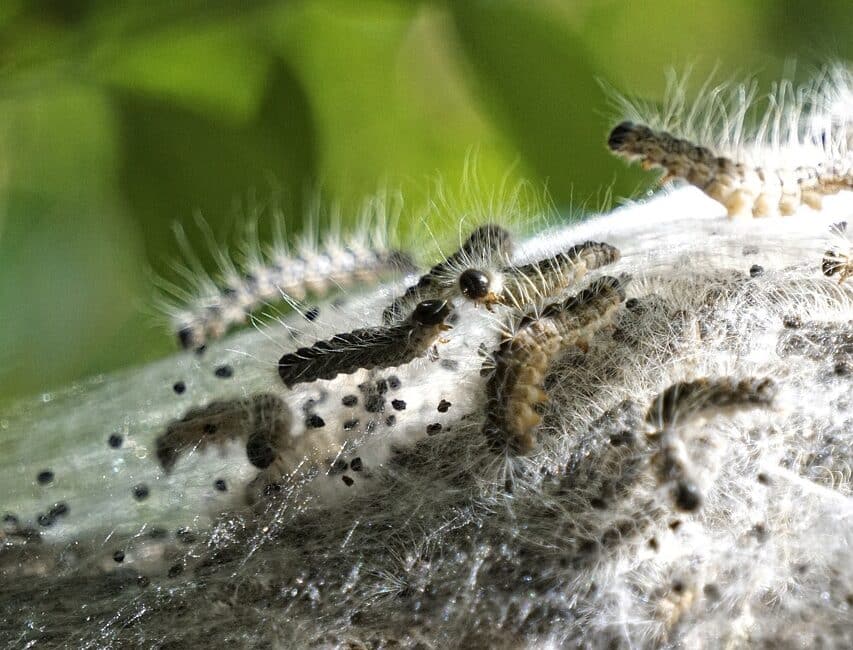
- Oak Processionary Moth (OPM) – OPM (pictured above) are particularly concerning due to health risks to humans and animals. The caterpillars of the OPM (which are the larval stage of the insect’s lifecycle) have toxic hairs that can cause skin rashes, eye irritations, and respiratory problems. They pose a serious threat to oak trees by stripping the foliage, weakening the trees, and making them more susceptible to other pests and diseases.
- Brown tail moths – the caterpillars of the brown tail moth can destroy a fully grown tree in one season. They can also cause harm to people, should a person come into contact with the minuscule white hairs they shed by touching the branches or leaves of an infested tree, or simply by being outside near an infested tree on a breezy day. Exposure to the hairs causes a rash that produces red welts that itch and burn, and bumps that can grow to the size of a 50-pence piece. The itching and burning can last for more than a week. In some cases, the hairs can cause respiratory distress, which can be extremely serious if the person exposed has a pre-existing respiratory condition.
The importance of professional intervention
Hiring a business that has ARB accreditation for its tree surgery services ensures you receive expert care and management for pest issues. The professionals you hire will have the necessary training and experience to identify, treat, and prevent pest infestations effectively.
Unlike DIY methods, professional interventions provide safe, long-term solutions and mitigate the risk of pest resurgence and cross-contamination.
Benefits for businesses and councils
Maintaining pest-free outdoor spaces is crucial for businesses and councils. Healthy, well-maintained landscapes enhance the aesthetic appeal of commercial and public areas, ensuring they remain attractive and inviting.
Moreover, professional pest management protects the health and safety of those who use your outside spaces, preventing the spread of allergens and other health risks associated with pests like OPM.
Investing in professional care can also be more cost-effective in the long run, as it prevents extensive damage that could be expensive to repair if left untreated.
Preventative measures and ongoing maintenance
If you are responsible for an outside space, it is advisable to err on the side of caution. It is never wise to assume that green spaces are pest free – in fact, it’s far safer to assume they are not, until proven otherwise, which is why we offer:
- Regular inspections – this enables us to catch pest infestations early, allowing for prompt and effective treatment. This proactive approach minimises damage, helps maintain the health of your plants and gives our clients peace of mind.
- Integrated pest management (IPM) – IPM combines various strategies for controlling pests, including biological control, habitat manipulation, and the use of resistant plant varieties. This approach reduces the reliance on chemical treatments and promotes sustainable pest management practices. With more and more of our clients focused on the need to convey more environmentally responsible brand values, this is a popular choice.
The value of pre-emptive action
In summary, pests like box caterpillars pose a significant threat to the health and beauty of outdoor spaces. By understanding these threats and taking proactive steps, businesses and councils can protect their valuable landscapes, while ensuring they remain safe and attractive.
Working with ARB accredited tree surgeons to protect these landscapes from pests ensures not only the highest levels of expert care but also safe, reliable, long-term solutions, providing value for money and peace of mind.
So, don’t let uninvited invaders wreak havoc – contact us today and we’ll take care of the problem.