

What is an allée?
The term for planting trees in rows, either side of roads or walkways is an avenue or an ‘allée’. An allée is a path lined with trees or plants of the same species and is a formal design concept, where the view is extended to a emphasise landscape or an architectural feature in the distance. This design element can be seen in many places worldwide and can have wonderfully dramatic effects.

This rather iconic picture beautifully illustrates an allée at Oak Alley Plantation in Louisiana, USA. The oak trees (over 300 years old) provide a picturesque canopy, framing the quarter of a mile walk to the entrance of this magnificent home.
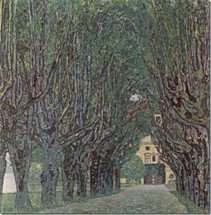
Allées in art
This landscape element of allées combines both the incredible natural beauty of trees and symmetry. The intent of an allée is to emphasise the axial view – this view is intended to make you want to walk down the path and find out what is at the end.
The beautiful painting above, by Austrian artist Gustav Klimt (1862-1918), shows inspiration by an allée.
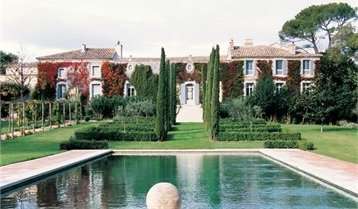
Lining a driveway
If you want to line them up along a long or curving driveway, choosing the correct kind of tree for your landscaping plan will improve the appearance and feel of your home. There are many great tree varieties to choose from, ranging from ornamental and shade trees to trees that give your home a formal and elegant look.
With so many alternatives, it can be challenging to choose which tree will thrive in your particular region and, importantly, which tree will give you the appearance you require.
It’s also crucial to consider if you want to have evergreen or deciduous trees lining your driveway. Evergreen trees, like pine and leylandii, retain their colour throughout the year. Deciduous trees, like oak and maple, drop their leaves in the autumn.
Generally, depending on how big the tree will be when it is fully grown, you should plant any tree between 3 and 8 feet away from the edge of your driveway. This will prevent the pavement cracking caused by tree roots. Also, to avoid crowding and to maintain a beautiful aesthetic, you should space trees apart by roughly one and a half times the mature tree’s spread.

These are the top 20 trees for lining a driveway, as chosen by Jamie at Why FarmIt:
-
- Bradford Pear (Pyrus calleryana)
- Serviceberry (Amelanchier canadensis)
- Honey Locust (Gleditsia traicanthos var. inermis)
- Italian Cypress (Cupressus sempervirens)
- Leyland Cypress (x Cupressocyparis leylandii)
- Eastern Red Cedar (Juniperus virginiana)
- Juniper (Juniperus communis)
- Ginkgo (Ginkgo biloba)
- Crepe Myrtle (Lagerstroemia indica)
- Red Maple (Acer rubrum)
- Birch (Betula pendula)
- Emerald Green Aborvitae (Thuja occidentalis ‘Smaragd’)
- Plum (Prunus americana)
- Dogwood (Cornus spp.)
- Rose of Sharon (Hibiscus syriacus)
- Chinese Elm (Ulmus parvifolia)
- Crabapples (Malus spp.)
- American Beech (Fagus grandifolia)
- Zelkova (Zelkova serrata)
- Weeping Willow (Salix alba)

Creating your own allée at home
Martha Stewart’s guide has these pointers:
Step 1. Look for a straightway. “It doesn’t have to be long or tall—and can be as wide or narrow as you want—but it should lead to a focal point,”
Step 2. Determine your allée’s size.
Step 3. Choose your plants. Go for low maintenance. “Hornbeams, cypress, redbuds, and weeping cherries are perfect small trees. Large shrubs, like camellia, hydrangeas, or viburnums, would be ideal too.”
Step 4. Thinking about the vertical spacing. “They need to reach out and touch their neighbours.”
Step 5. When in doubt, plant trees – not flowers or shrubs. “I think it could be a lot of fun to do random fruit trees — but don’t intersperse them with conifers, then it becomes a mixed border.”

More amazing images
To see the most wonderful tree tunnels, take a look at the ‘magical’ ones shown in this BoredPanda article:
Refs:
https://www.marthastewart.com/8078516/how-plant-flower-tree-allee