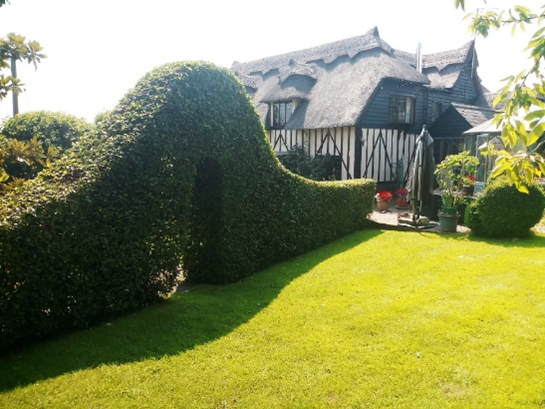

Portuguese Laurel by Tree & Lawn Company Ltd
The Art of Topiary
Tree & Lawn Company Ltd work with all manner of landscape gardening, tree surgery and tree surveying. We don’t often get the chance to use the art of topiary but we can certainly turn heads with our hedge trimming!
What is Topiary?
The cutting the foliage and twigs of trees, shrubs, and subshrubs to form and preserve clearly defined shapes is known as the horticultural practise of topiary. These shapes can be geometric or fanciful. Plants that have been fashioned in this way are likewise referred to by the word. It is a type of living sculpture as an art form – The Art of Topiary.
Traditional topiary uses foliage pruned and/or trained into geometric shapes. These shapes are often balls or cubes, obelisks, pyramids, cones, tiered plates, and spirals. More popular representations include the forms of people, animals, and man-made objects. Privet was described as, “so apt that no other can be like it, to be cut, led, and drawn into whatsoever forme one would, either of creatures, birds, or men armed or otherwise,” by royal botanist John Parkinson. However, evergreens have traditionally been the main choice for Early Modern topiary, with yew and boxwood taking the lead over other species.

Topiary through the ages
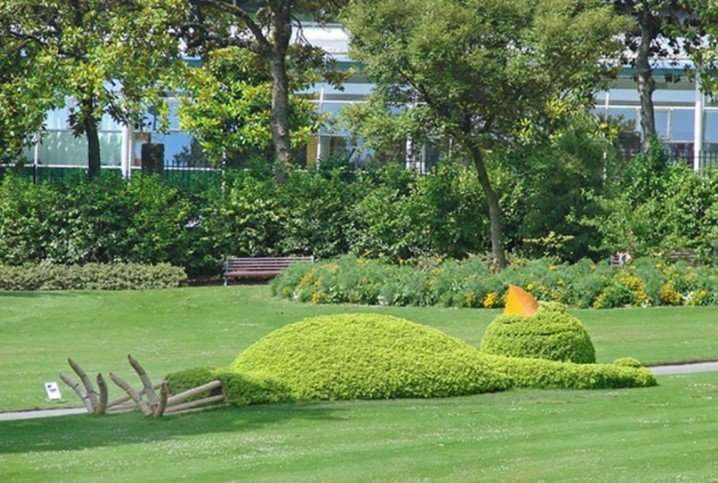
European topiary dates from Roman times. Gaius Matius Calvinus, in the circle of Julius Caesar, was first credited with introducing the first topiary to Roman gardens. We know this because Pliny the Younger, in letters, disapprovingly described the use of elaborate figures of animals, inscriptions, cyphers and obelisks in clipped greens at his Tuscan villa.
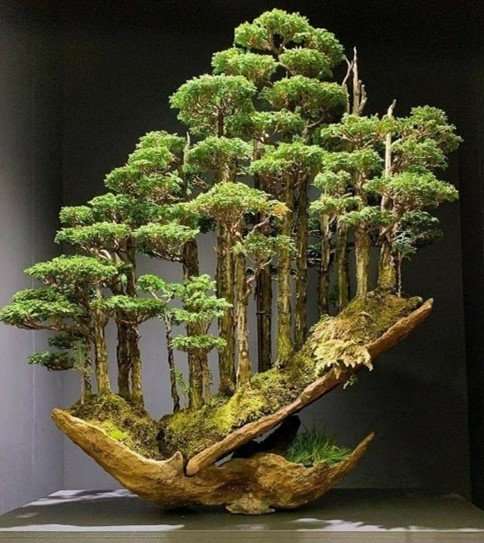
Clipping and shaping shrubs and trees has been done with comparable severity in China and Japan, although for different reasons. The purpose is to create an artistic portrayal of the “natural” form of venerable old trees, as shaped by wind and weather. The kindred arts of Chinese ‘penjing’ and Japanese ‘bonsai’ are where they find their most concentrated representations. Cloud-pruning in Japan is the most similar to European art: the cloud-like formations of clipped growth are supposed to be appreciated best after a snowfall.
And in stark contrast, and why indeed not, topiary Disney characters have been created and maintained at Disneyland for decades.
18th Century Topiary decline
The English garden was scrubbed clean of its hedges, mazes, and topiary in the 1720s and 1730s by the generation of Charles Bridgeman and William Kent. Topiary remained popular in cottage gardens but lost favour in aristocratic gardens. Where a single example of traditional forms, such as a ball or a tree trimmed to a cone in several cleanly separated tiers, meticulously clipped, and perhaps topped with a topiary peacock, could be passed down as an heirloom.
Visit some of the UK’s topiary
Best Examples
The National Trust have superb examples of topiary in some of their grandest properties, as you would expect. Here are a few to visit – do go and see some, if you get the chance:
- Mount Stewart, County Down, Northern Ireland
- Cliveden, Buckinghamshire
- Chastleton House, Oxfordshire
- Hidcote Manor Garden, Gloucestershire
- Chirk Castle, Wales
- Biddulph Grange Gardens, Staffordshire
- Blickling Hall, Norfolk